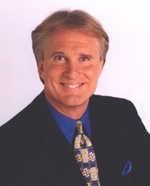
by Jack Lannom
Category: Leadership
Conviction gives birth to confidence; and confidence breeds courage. Last month, we began discussing the benefits that an organization reaps when its managers lead by Example. Stability is one outcome for the logos-driven organization; courage is another. Courage comes from conviction-the conviction born of belief in a solid philosophy.
Conviction is fundamental, and courage is a derivative of that conviction.
The courage displayed by the leaders at Johnson and Johnson was the outcome of their beliefs. This is an appropriate time to ask yourself: Does your company have that kind of conviction... that courage? The only way such courage is developed is when one has a credo-a philosophy-which breeds conviction. In order to go up, you must go down. Courage is the evidence, the living example of the credo.
Courage is the fruit of which the logos is the root.
In 1775, Patrick Henry rose to his feet to exhort his fellow Virginians to declare war on the British oppressor-a ragtag group of rebels was about to call out the most formidable world superpower of that day. Henry's unforgettable oratory provides a stirring example of the courage that is born only of the deepest conviction:
The battle, sir, is not to the strong alone; it is to the vigilant, the active, the brave. Besides, sir, we have no election. If we were base enough to desire it, it is now too late to retire from the contest. There is no retreat but in submission and slavery! Our chains are forged! Their clanking may be heard on the plains of Boston! The war is inevitable-and let it come! I repeat it, sir, let it come! It is vain, sir, to extenuate the matter. Gentlemen may cry, peace, peace!-but there is no peace. The war is actually begun! The next gale that sweeps from the north will bring to our ears the clash of resounding arms! Our brethren are already in the field! Why stand we here idle? What is it that gentlemen wish? What would they have? Is life so dear, or peace so sweet, as to be purchased at the price of chains and slavery? Forbid it, Almighty God! I know not what course others may take, but as for me: Give me liberty or give me death!
The freedoms that we Americans enjoy today were not bestowed on us by a tyrannical national sovereign; we are free from King George because a relatively small group of men and women were possessors of a philosophy that was true and noble and right and pure-a philosophy that stated as its bedrock axiom that all men are created equal. The law was to be king in the American colonies; the king was not a law unto himself. That philosophy gave birth to conviction; conviction gave birth to confidence; and confidence bred extraordinary courage. Patrick Henry uttered those unforgettable words, and his conviction rallied a nation.
History shows that great initiatives are founded on great beliefs.
Not long after Patrick Henry expressed the unwavering courage of his convictions, Professor Alexander Tyler, an 18th century historian and economist, wrote:
The average age of the world's greatest civilizations has been 200 years. These nations have progressed through this sequence: From bondage to spiritual faith; from spiritual faith to great courage; from great courage to abundance; from abundance to selfishness; from selfishness to complacency; from complacency to apathy; from apathy to dependency; from dependency back again into bondage.
Notice that Professor Tyler believed that the first step up out of bondage is "spiritual faith." The first step on the road to greatness is a great philosophy, a logos that unites the people. The product of that logos is "great courage." This courage springs from the conviction that is born of the philosophy. Philosophy is pragmatic! Patrick Henry was working from a firm foundation of faith, which bred great courage; he was the man for the moment. The words that poured out of him were not merely a great impromptu speech; they represented his life, the heartbeat of his conviction. Professor Tyler observed that the fourth stage of every great civilization is "abundance"-liberty. Once the form of the logos has been established, the members of the organization or community can live in freedom. The whole world heard of America's freedom and millions of individuals have sought it for themselves. They sought to leave the bondage of their old lands and come to the balance of form and freedom that is the logos of the United States. Liberty is a necessary outcome of having the proper foundation.
I do not believe that the life of a business entity is all that different from the life of a nation.
Companies must start with a firm conviction in the truth of a logos-a faith, a credo. Conviction will give birth to the courage that enables men and women to do the right things for the right reasons. It is essential, however, to begin at the beginning. Then, and only then, will we have great courage. And then we will enjoy great abundance-liberty and freedom.
I have worked extensively with a company in Orlando, Florida that operates in this very kind of freedom. Staffers at ZHA, Inc., a busy international consulting firm, have great liberty: freedom to learn, to explore, and to discover; freedom to realize their potential; freedom to take risk; freedom to excel; freedom to think; even freedom to fail and freedom to disagree. I have never seen such liberty in an organization-staffers are free to achieve, and even more importantly, they are free to esteem others more highly than themselves and to recognize and celebrate others' successes.
Author BIO
Jack Lannom
Author of The People First Effect: Seven Keys for Mastering High Trust in a Low Trust World and creator of the People First Philosophy, Jack Lannom has been coaching, motivating, consulting, and mentoring companies and organizations for more than forty years. Jack has been developing what is now People First International since his initial creation of the Pyramid of People Power in the 1980’s.
Jack has worked with companies such as AT&T, UPS, MiTek Industries (a Berkshire Hathaway company), PepsiCo, Yum Brands, and Royal Caribbean Cruise Line, and is author of the award-winning book, People First – Achieving Balance in an Unbalanced World.